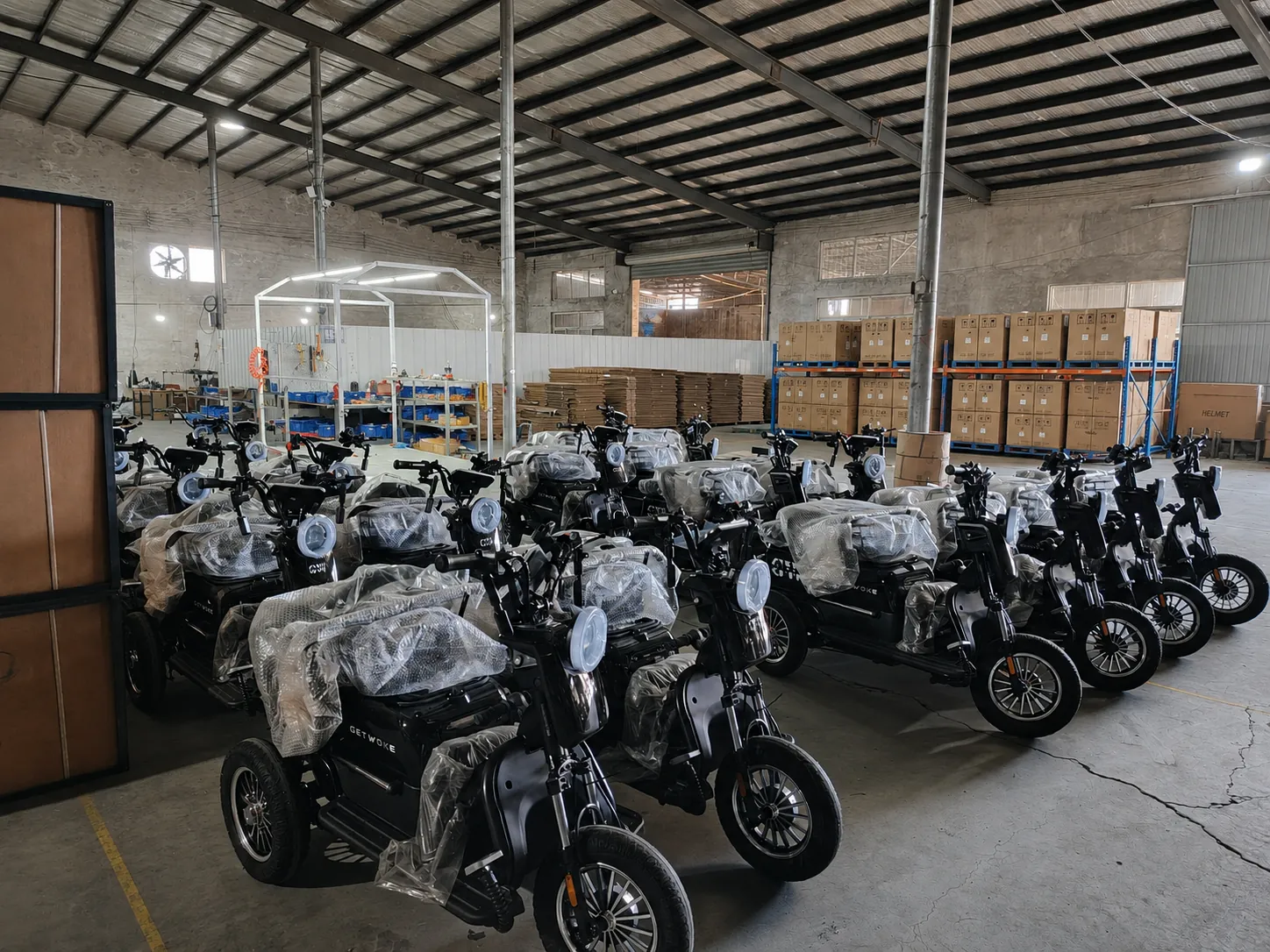
Compact passenger
X3 / X3S / X5 / Q3
- Neighborhood mobility and value-focused retail channels.
- Compact dimensions, 600 W motor class and strong container efficiency.
- Good starting point when price, handling and simple maintenance matter.

Private-label manufacturing
Build a market-specific product program around passenger mobility, leisure use, light-utility needs, branding, packing and after-sales support.
For most standard passenger and leisure platforms.
After configuration, branding and packing details are confirmed.
Container planning is checked before quotation confirmation.
Light-utility use is supported without shifting the brand toward cargo.
Custom electric tricycle program
Inspired by strong B2B product-guide pages, this NAVERO version keeps the useful structure: fast navigation, real configuration choices, model fit and repeated inquiry points. The content is rebuilt for our own passenger and leisure electric tricycle range.
Step 01
The best OEM project usually starts from an existing, proven platform. We then adjust color, branding, motor, battery, packing and service parts around your market.
Compact passenger
Integrated-seat leisure
Double-row passenger
Semi-canopy passenger
Step 02
For importers and distributors, branding is not only decoration. It affects retail recognition, spare-parts lookup, warranty records and whether customers remember your local brand.


Step 03
Retail dealers, resort operators and fleet buyers usually need different visual strategies. A low-price dealer channel may prefer standard colors; a resort or private-label program may need a cleaner premium palette.
| Buyer channel | Recommended direction |
|---|---|
| Dealer retail | Use standard colors with strong recognition and fast replenishment. |
| Resort / campus | Choose calmer colors, logo decals and consistent fleet identity. |
| Rental program | Use durable surfaces, visible numbering and replaceable decals. |
| Private label | Confirm logo, model name, labels, catalog name and carton marks together. |
Step 04
For passenger and leisure tricycles, bigger power is not always better. The correct configuration depends on road surface, passenger load, climate, target speed, charging habit and local category requirements.
Common for compact and double-row passenger platforms where efficiency, cost and easy service matter.
Used on larger light-utility and semi-canopy models where body size, comfort features and road conditions require more output.
12-tube or 15-tube controller selection follows motor class, vehicle size and buyer-confirmed usage.
Battery capacity, charger and transport documents should be confirmed before container planning.

Step 05
After the power system is selected, the next question is whether the vehicle can handle local roads, weather and daily service. Importers and distributors should review these parts before confirming a container order.

The rear axle influences traction, noise, maintenance and load stability. For passenger and leisure tricycles, stable low-speed handling and serviceable differential structure are more important than a heavy cargo-style setup.
Buyer question: paved community roads, mixed roads or rougher local streets.Brake size and adjustment matter in passenger service because stop-and-go routes create wear. Common NAVERO models use front and rear drum brake configurations matched to vehicle size and tire setup.
Buyer question: private-site cruising or frequent public-route stops.Front fork and suspension choices affect comfort, steering confidence and customer perception. Hydraulic-style or hydraulic front forks are useful where comfort and uneven roads matter to the final buyer.
Buyer question: smooth resort roads, neighborhood streets or mixed surfaces.E-coating, powder coating or anti-corrosion attention should be matched to humid, rainy or coastal markets. This is especially important for tropical and seaside leisure applications.
Buyer question: inland dry market, rainy region or coastal climate.Controller, wiring harness, charger connection and lighting points should be reviewed for rain-prone markets. Waterproofing is a practical service-risk topic, not only a sales claim.
Buyer question: daily rain exposure, storage condition and washing habit.300-8 or 300-10 tubeless tire choices affect ride comfort, stability, parts supply and local maintenance. The choice should follow vehicle size, road surface and local replacement availability.
Buyer question: easy local tire supply or controlled fleet maintenance.Headlight, rear light, reflectors and local labels help the buyer prepare for safer daily operation, especially for community roads, resort routes and mixed day-night use.
Buyer question: private-site use, public-road use or night operation.Clean wiring layout, connector protection and model-specific records make after-sales work easier. This helps dealers diagnose electrical issues faster after vehicles enter the local market.
Buyer question: who will service electrical issues after delivery.
Step 06
Because NAVERO focuses on passenger and leisure use, comfort is a commercial feature. Seating layout, canopy coverage, boarding convenience, lighting, handholds and small storage areas can decide whether a local dealer has a convincing story.
Step 07
A unit price alone can mislead the buyer. Carton size, complete-unit quantity, SKD sets, CKD feasibility, spare-parts package and warehouse receiving process all affect the final landed cost.


Step 08
Different markets may care about road-use category, speed setting, motor power, battery documents, user manual, labels, lighting and registration support. NAVERO cannot replace the importer's local legal approval, but we can prepare factory-side files and configuration records for the buyer's review.
| Before quote | Target country, vehicle category, speed and power expectations. |
| Before production | Labels, manual language, logo files, carton marks and configuration sheet. |
| Before shipment | Packing list, battery-related documents and model-specific spare-parts list. |
Step 09
For B2B buyers, the first container is only the start. Spare parts, warranty lookup, repeatable configuration and clear service records help your local channel sell with more confidence.
Brake parts, tires, lights, switches and common service items can be planned by model.
Controller, charger, wiring and key electrical items are matched to confirmed configuration.
Panels, decals, seats and canopy-related parts can be discussed for fleet or dealer programs.
Serial and configuration records help reduce confusion when a dealer requests service parts.

OEM cooperation process
Country, buyer type, route, passenger use and channel plan.
Compact, integrated-seat, double-row or semi-canopy platform.
Motor, battery, controller, seating, color and light-utility details.
Logo, decals, model labels, manual language and carton marks.
MOQ, lead time, payment, delivery format and container estimate.
Production follows the confirmed configuration and buyer records.
Functional checks, visual checks, packing and loading preparation.
Packing files, model records and buyer-side documentation support.
Market feedback updates the next order and spare-parts plan.
Your project
We will use your application and channel plan to identify the right existing product platform and configuration questions.